The Democratic Party released a long-awaited report on the 2024 presidential election on Thursday, breaking down what led to its widespread losses across the country.
The 192-page report, released by Democratic National Committee (DNC) Chair Ken Martin after it was initially leaked, sought to answer questions such as how the party blew through billions of dollars and what its path forward would be as the 2026 midterms and the 2028 presidential election loom.
Although the report was finished in late 2025, the DNC had kept it from the public until now. Martin had initially decided to shelve the report, following a series of Democratic wins in November.
“In short, I didn’t want to create a distraction. Ironically, in doing so, I ended up creating an even bigger distraction,” Martin wrote in a statement Friday. “And for that, I sincerely apologize.”
Republicans pounced on the issue as evidence that the Democratic Party remains in disarray, despite its best attempts to galvanize against President Donald Trump ahead of the 2026 midterms.
“The Democrat Party has completely collapsed after getting humiliated in 2024, and now even failure Ken Martin is admitting Democrats turned their own so-called ‘autopsy’ into an embarrassing political circus,” RNC press secretary Kiersten Pels said in a statement shared with Newsweek. “Democrats spent months leaking, infighting, blaming each other, and flooding DNC leadership with angry demands for answers after voters overwhelmingly rejected their toxic far-left agenda and weak leadership.”
Read the DNC 2024 Autopsy Report
The document—produced by a Democratic-aligned author but explicitly disclaimed as not representing the official views of the DNC—lays out a wide-ranging critique of the party’s messaging, organizing, and long-term strategy. It argues that Democrats’ struggles in 2024 were not an isolated defeat, but the continuation of a longer decline stretching back more than a decade.
The DNC released the report with annotations, showing its skepticism over sourcing and interviews, as well as its readiness for public viewing.
“Frankly, focusing exclusively on debates about the report’s quality or methodology misses the larger point entirely. Every post-election review will have areas people agree with and areas they dispute, but that does not negate the importance of engaging seriously with the underlying concerns being raised,” DNC member Michael Kapp of California told Newsweek.
“It would be a disservice to ignore those lessons completely, and I hope this report forms the basis for a robust conversation not just about what happened in 2024, but about how Democrats build a stronger, more durable party moving forward.”
What Did Autopsy Report Say About DNC’s 2024 Presidential Election Bid?
At its core, the report paints 2024 as both painfully close and deeply consequential.
Democrats lost the presidency and key Senate seats, even as the margins in several battleground states were razor-thin. The report noted that just a few hundred thousand votes across a handful of states determined the outcome, yet warned that focusing on how close the race was risks obscuring bigger problems.
Certified results showed Harris lost Pennsylvania by about 119,000 votes, Michigan by about 80,000 and Wisconsin by about 30,000—a combined total of roughly 230,000 votes.
One of the most striking conclusions was that the Democrats’ financial advantage did not translate into victory. The party significantly outraised and outspent Republicans across federal races but still failed to win back control of the White House. The report questioned whether the party’s spending is being deployed effectively, citing a heavy concentration of resources among a small network of consultants and media firms.
The document also highlighted growing cracks in the Democratic coalition. It pointed to declining support among men, working-class voters, and non-college-educated Americans, particularly in rural areas. Younger voters—especially young men—were flagged as another group where Democrats struggled to maintain the levels of support seen in earlier elections.
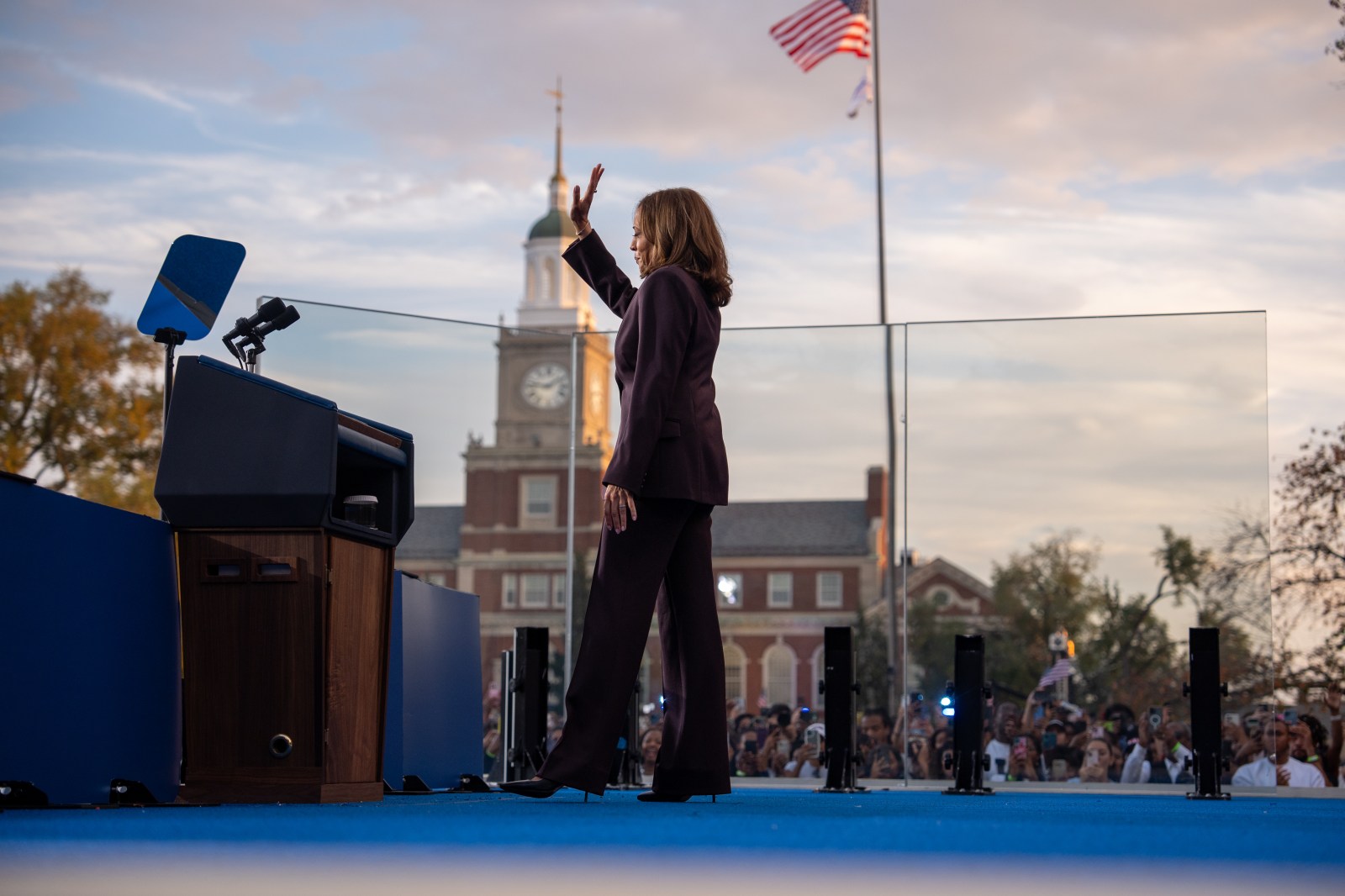
Meanwhile, down-ballot Democrats often outperformed the top of the ticket, suggesting that voters were open to individual candidates but less convinced by the national campaign. In states like North Carolina, Democratic candidates for governor and attorney general ran notably ahead of the presidential nominee.
Messaging is another major focus of criticism. The report argued the national campaign failed to define a clear identity and relied too heavily on opposition to Republican Donald Trump without offering a compelling positive case. It also suggested Democrats underestimated the need for aggressive contrast messaging, concluding that the campaign’s reluctance to go negative on Trump left voters without a fully developed view of the stakes.
Strategically, the report contrasted what it describes as a Democratic “always late” approach with a Republican “always on” model. While Democrats concentrated spending and outreach late in the cycle, Republicans maintained year-round engagement that shaped voter perceptions well before the election.
At the same time, the party’s organizing efforts were portrayed as both massive in scale and flawed in execution. While Democrats made hundreds of millions of voter-contact attempts, much of that outreach relied on low-response tactics such as phone calls and text messages rather than door-to-door canvassing, which the report identifies as far more effective.
“No single document will answer every question about 2024, but this report raises serious strategic and organizational questions about rebuilding credibility with working-class voters, strengthening state parties, improving candidate definition, and investing in year-round organizing instead of episodic engagement every four years,” Kapp told Newsweek.
“What stands out most is the warning against relying solely on national messaging and short-term campaign tactics while neglecting long-term relationship building. Democrats have historically been strongest when we organize consistently, invest locally, and show up everywhere — not just where polling says it’s convenient.”

What Has Kamala Harris Said About DNC’s 2024 Autopsy Report?
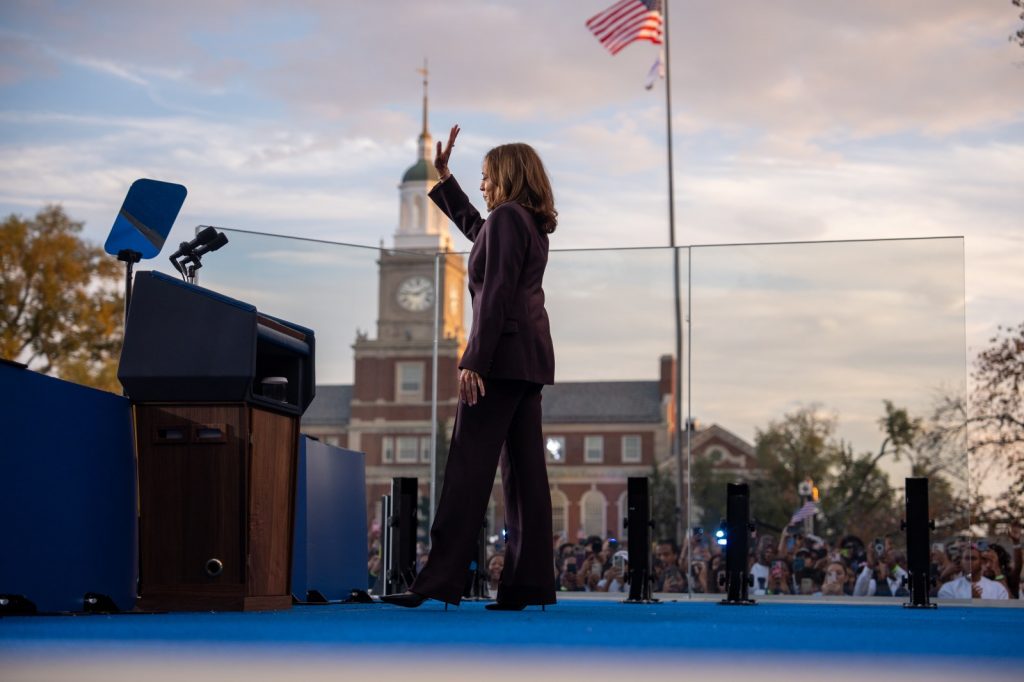
Two weeks ago, former Vice President Kamala Harris, who was the Democrats’ presidential candidate in 2024, said she had no problem with publicly airing what went wrong that year. NBC reported that Harris told donors she was fine with the autopsy being released, as she considers a potential 2028 run, but that she had not discussed the report with the DNC chair.
Harris lost the Electoral College vote 312-226, after becoming the nominee only a few months beforehand when former President Joe Biden dropped out of the race.
What Has DNC Chair Ken Martin Said About Autopsy Report?
In releasing the annotated version of the report on Thursday, Martin addressed his hesitancy to make the document public.
When commissioning the report, he said he did not want anyone tied to the 2024 campaign to lead it, adding: “What I did ask for were actionable takeaways for the future.”
Martin went on to say that when he first received the report, it was not “ready for primetime” and that he was not proud of the product release on Thursday.
“I don’t endorse what’s in this report, or what’s left out of it. I could not in good faith put the DNC’s stamp of approval on it,” Martin said. “But transparency is paramount. So, today I am releasing the report as I received it—in its entirety, unedited and unabridged—with annotations for claims that couldn’t be verified.”
The report did receive criticism on social media, with some commentators looking at, as Martin phrased it, “what’s left out of it,” including no mention of the war in the Middle East, which many said caused Democrats to lose faith in Harris and the wider party in 2024.

Who Is Paul Rivera, Democratic Strategist Behind Report?
Criticism online also mounted on the autopsy’s lead author, Paul Rivera, a longtime Democratic strategist, whom Martin tasked with putting the report together.
CNN reported that Rivera worked on the report part time, did not interview key figures, and repeatedly missed deadlines.
Newsweek confirmed that Martin announced on a staff call on Thursday that Rivera was no longer working with the DNC.
What Report Calls for Ahead of 2028
While much of the report focused on the election cycle two years ago, it also looked to give the DNC a clear path forward.
The report argues Democrats need a 10-year “Majority Party Strategy,” which would include:
- Rebuilding state and local parties
- Invest year-round, not just at election time
- Reconnect with working-class and rural voters
- Modernize media, tech, and organizing
Ultimately, the report’s outlook for 2028 hinges on whether the party is willing to make significant changes. It cautions against incremental adjustments, arguing that “tinkering around the margins” will not be enough to reverse current trends.
Instead, it calls for a fundamental rethink of how Democrats campaign, communicate, and organize—one that begins well before the next election cycle and continues long after it ends.
Matin agreed with some of these points in his response, saying, “While we are laser-focused on winning the elections ahead of us in November, we also have to keep our eyes trained on the long-game—how we win 5, 10, and 30 years down the line. That’s where the party comes in. We can’t expect to win if we don’t show up. We have to invest in building infrastructure and restoring credibility with communities that feel we have abandoned them.”
Some of the insights on the future were already laid out in the DNC’s 2026 playbook, first reported by Newsweek, which seeks to give the party a clearer, longer-term plan. While the autopsy will continue to garner attention and controversy, some Democrats expressed relief that it’s been released so the party can move on.
“This report would’ve gotten a C+ at best in a college class,” Jared Leopold, a Democratic strategist working on 2026 campaigns, told Newsweek. “I can’t believe we spent a year talking about it.”